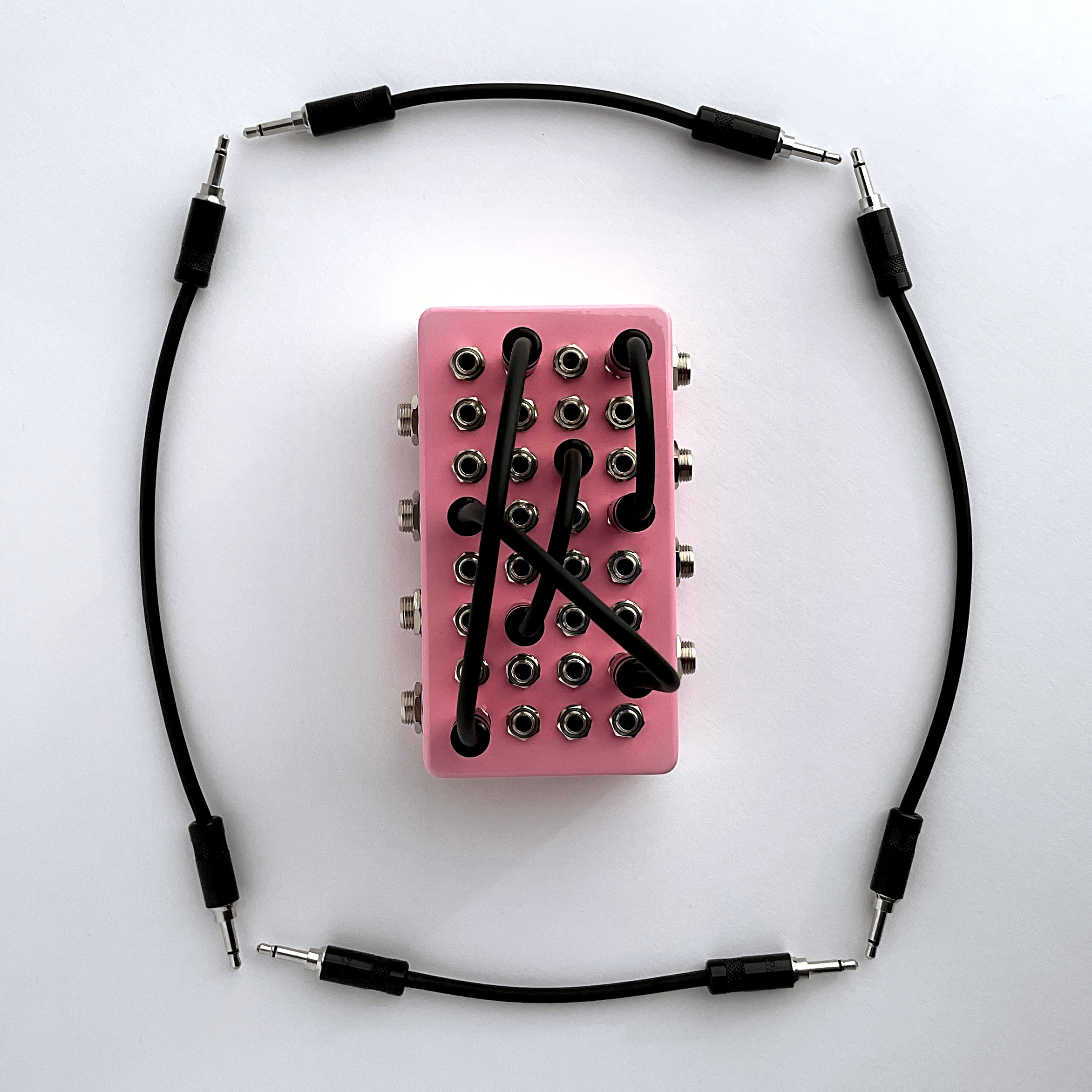


mulch box
$175.00
***Made-To-Order***
For now, Mulch Boxes are made-to-order in batches. Expect a turn around time anywhere from 2-6 weeks. You’ll get a notification email when your pedal ships. Reach out if you have any questions about your order.
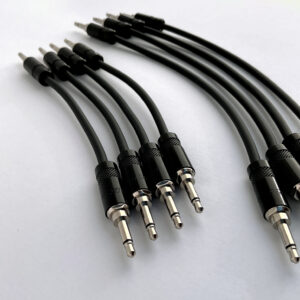
*patch cables sold separately*
*Ships Worldwide*
passive mult + patch bay
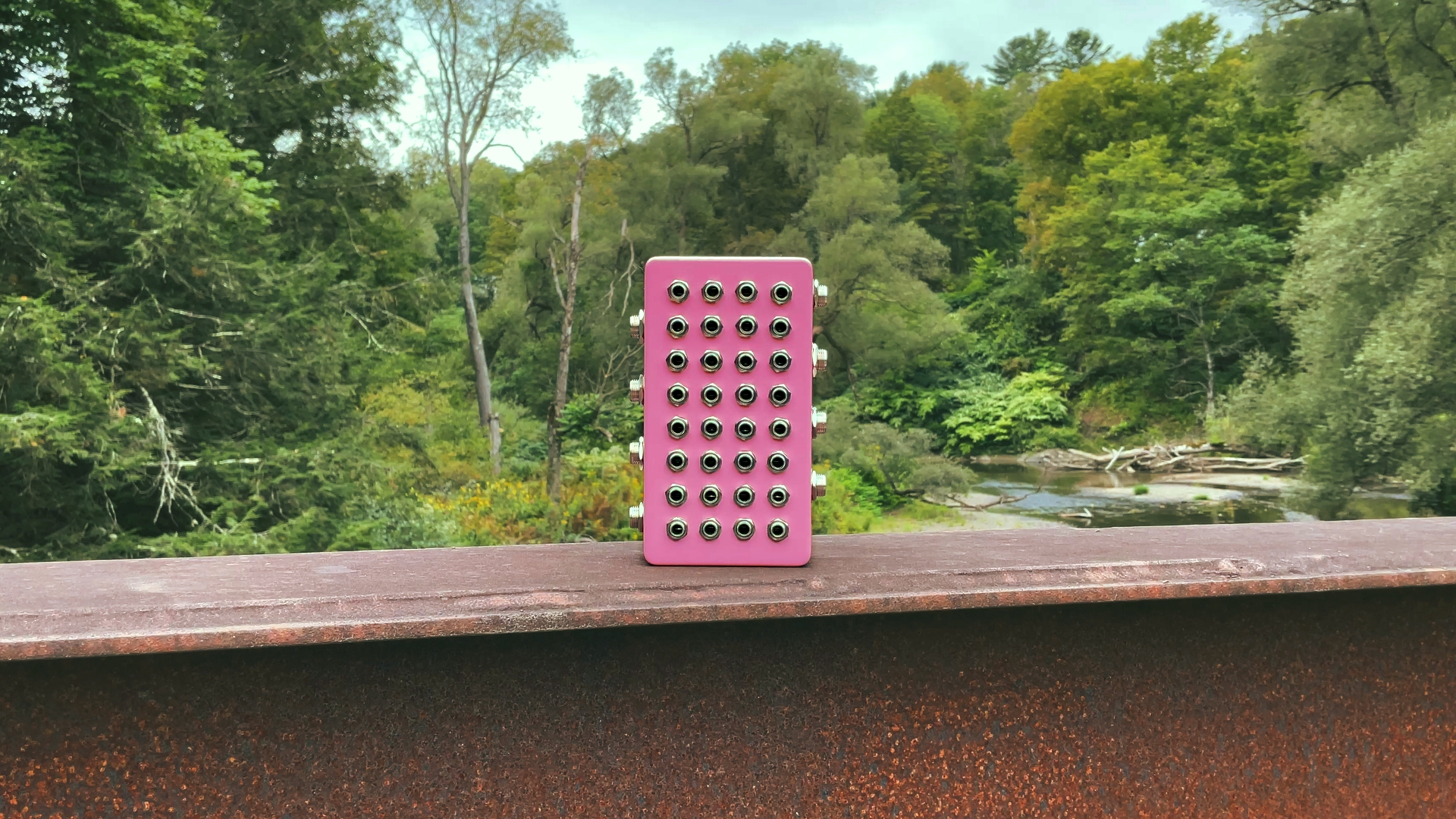
creative utility designed for experimentation
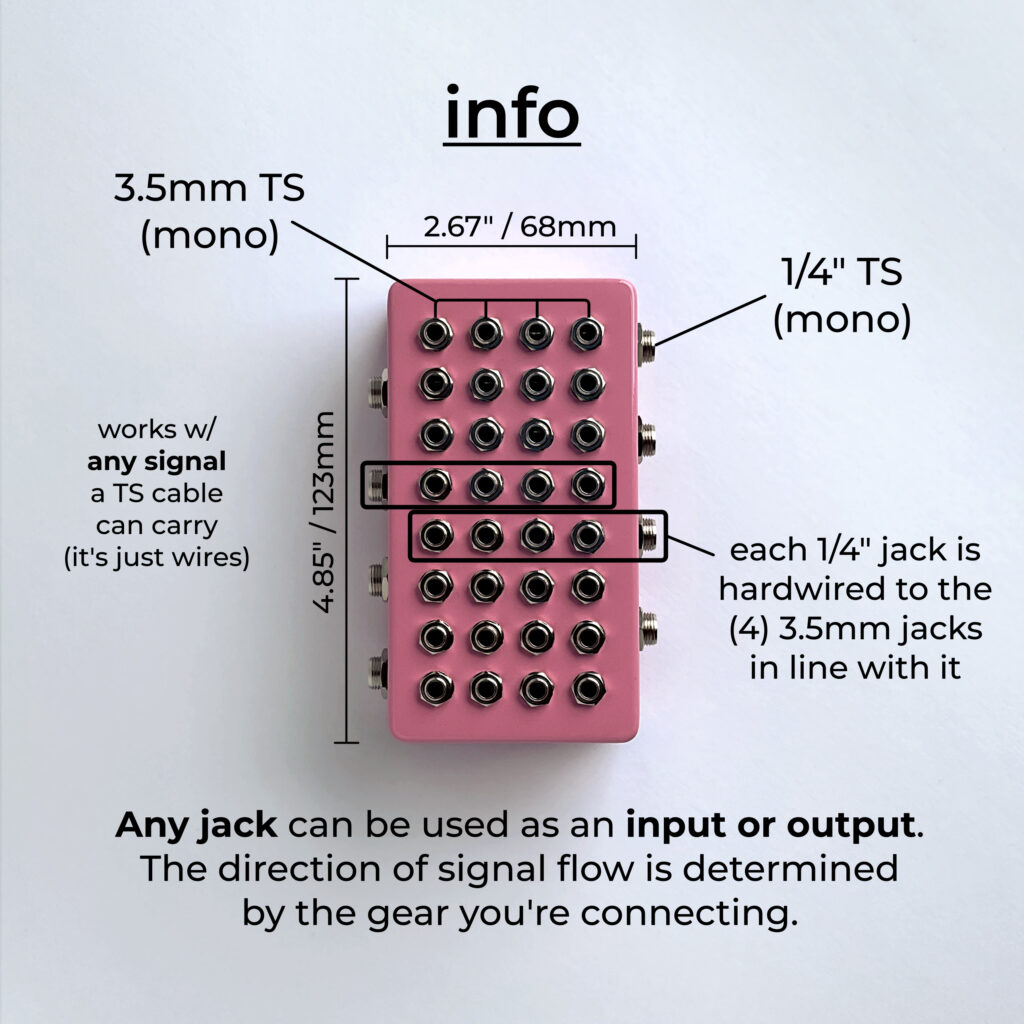
Oops! All Jacks
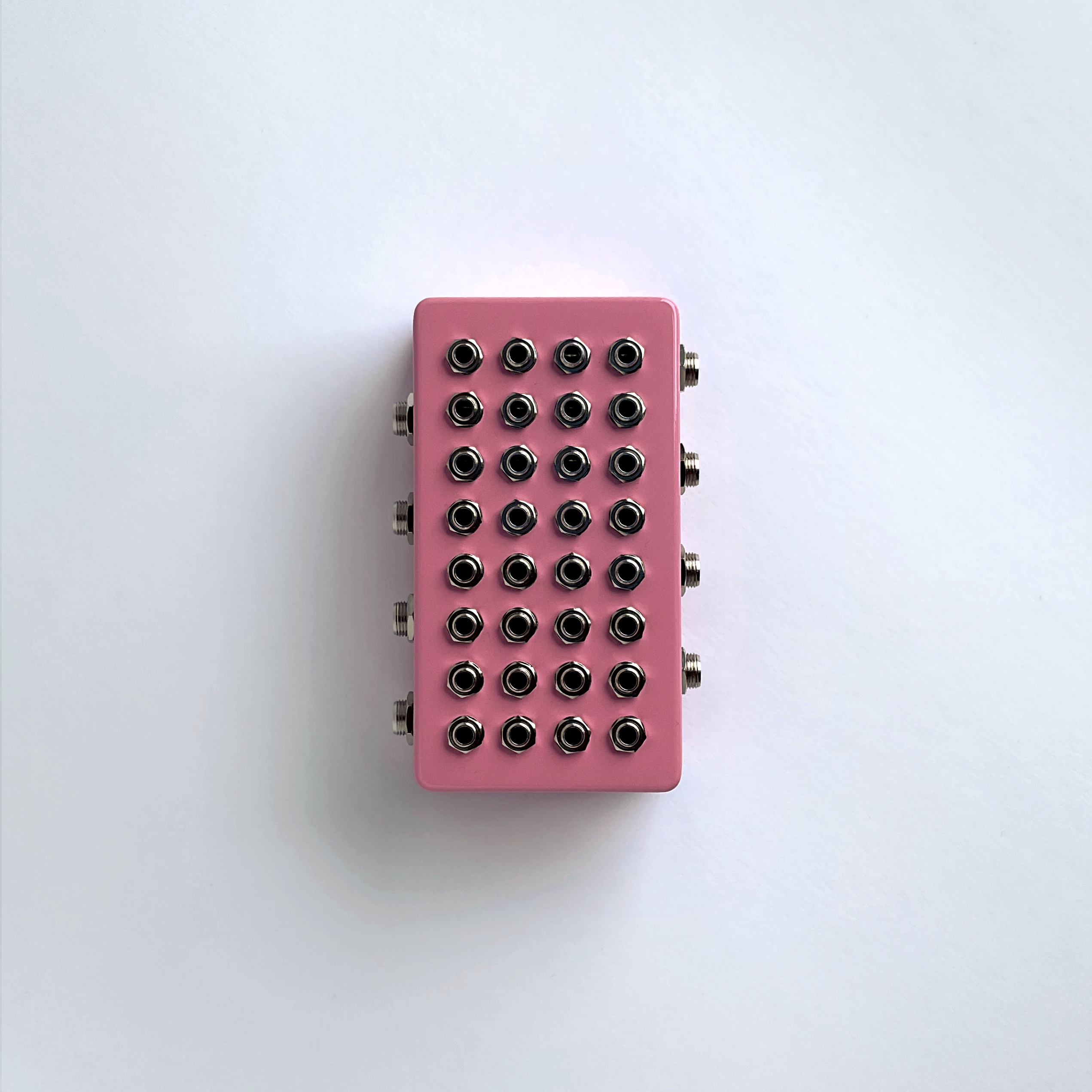
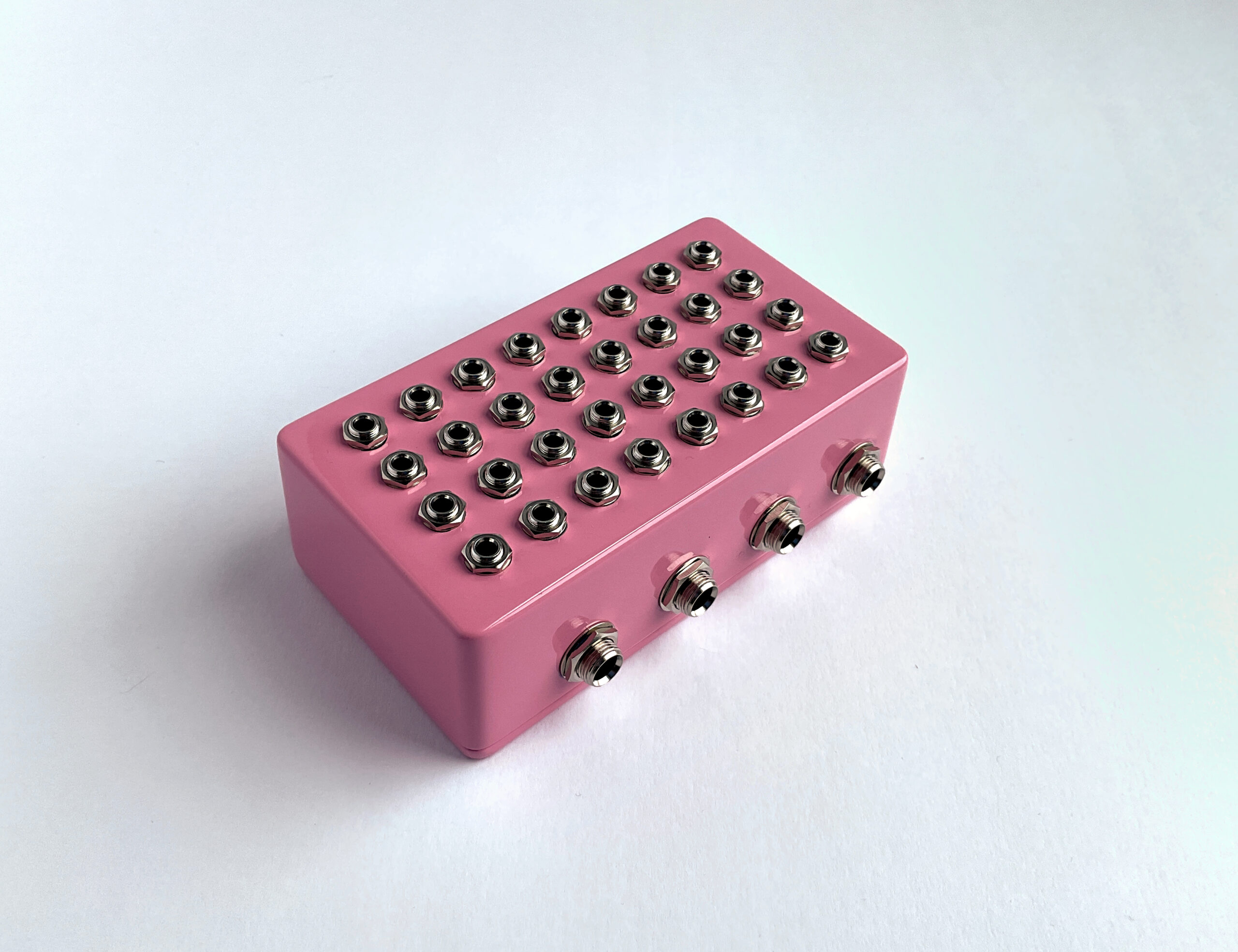
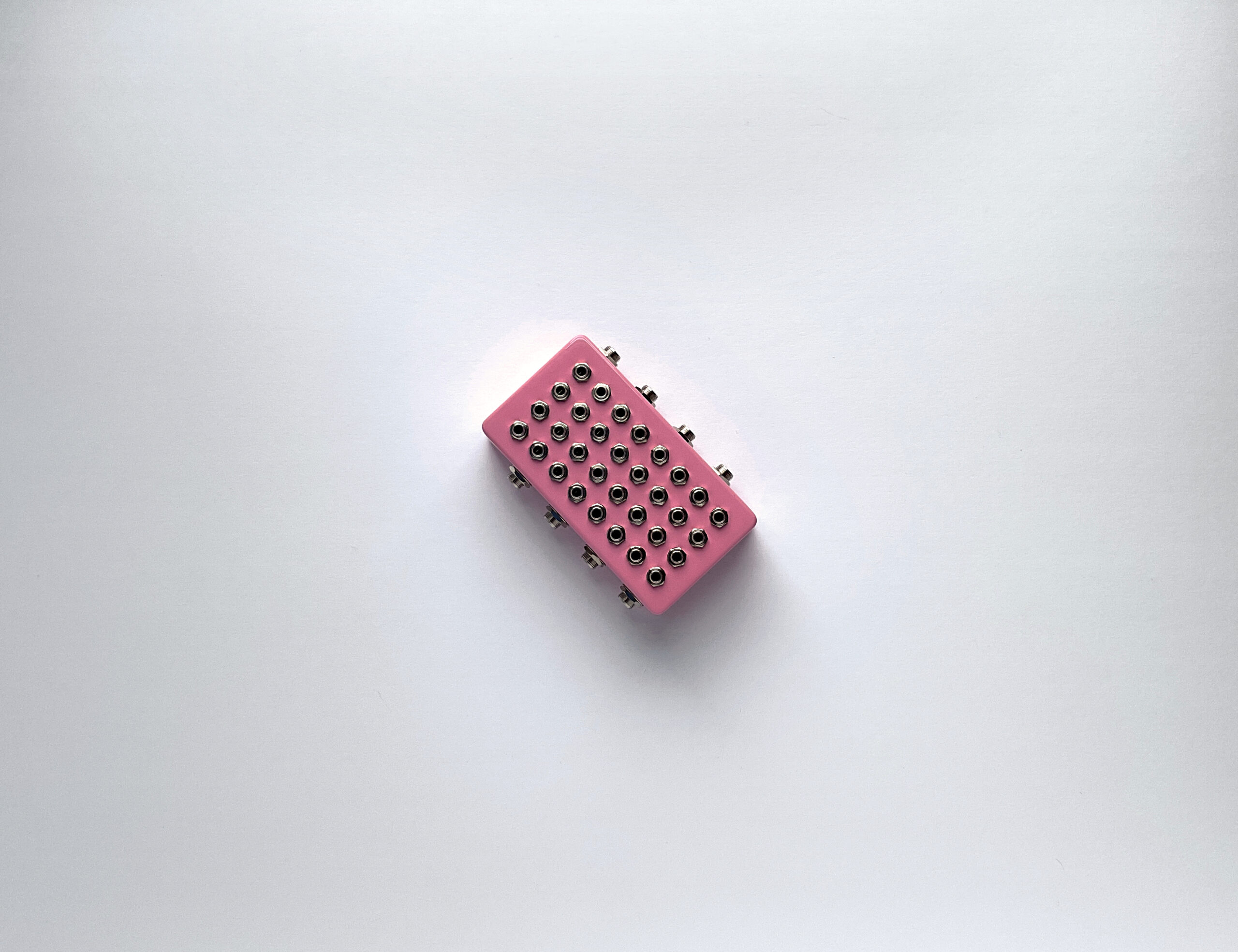
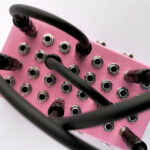
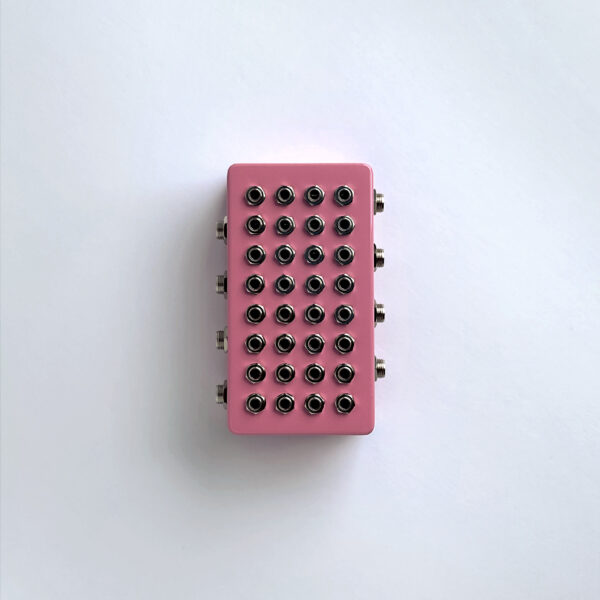
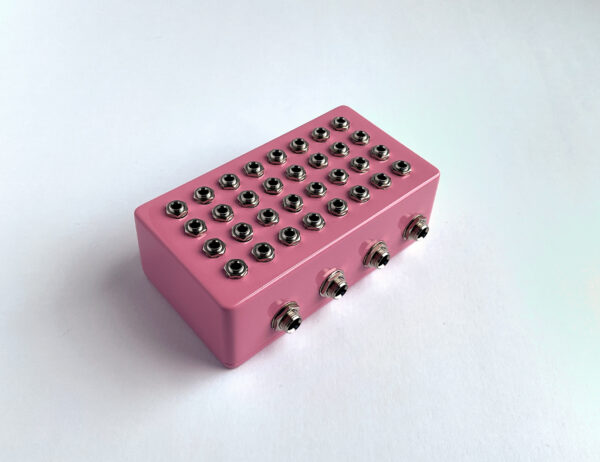
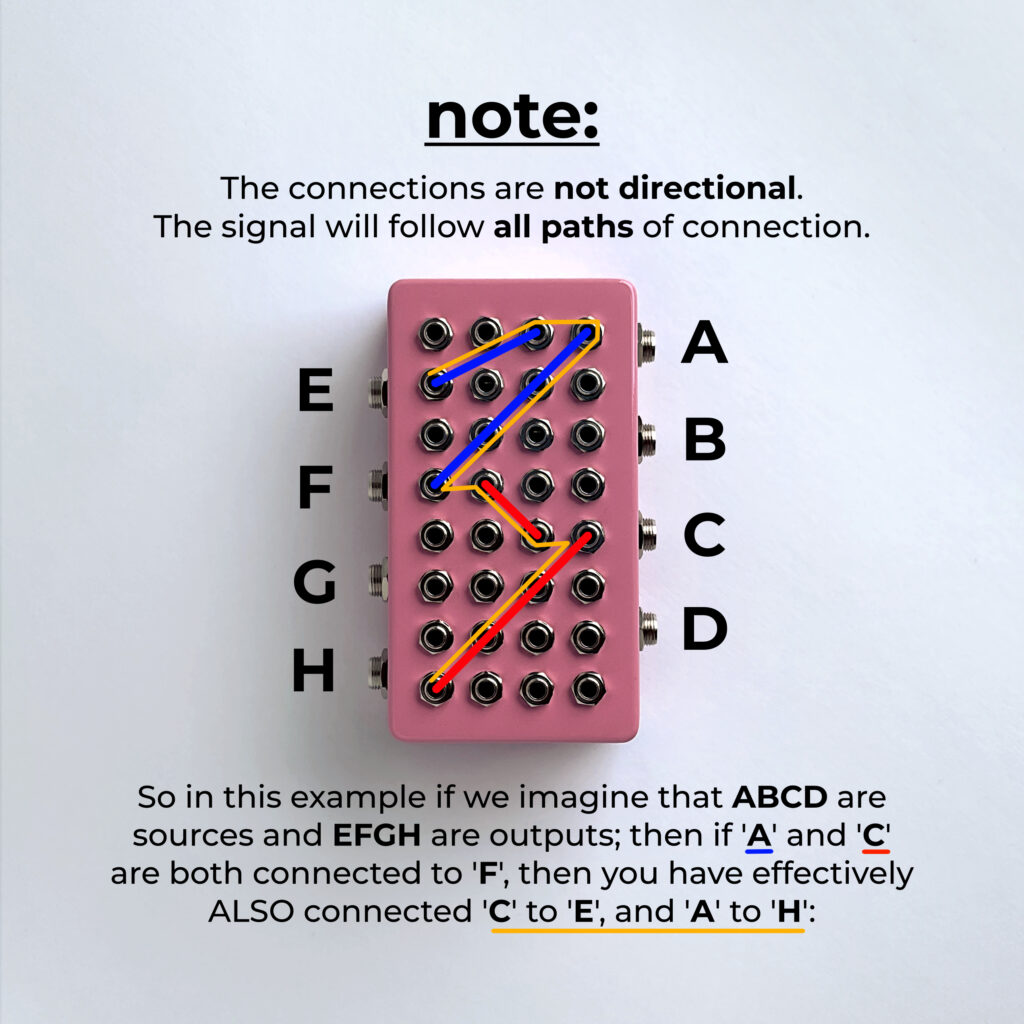
– 8 “channels”; each w/ (1) 1/4″ jack and (4) 3.5mm jacks that are hardwired together.
– Completely passive so no power supply is needed and it accepts any signal type/strength that you can send through a TS (mono) cable.
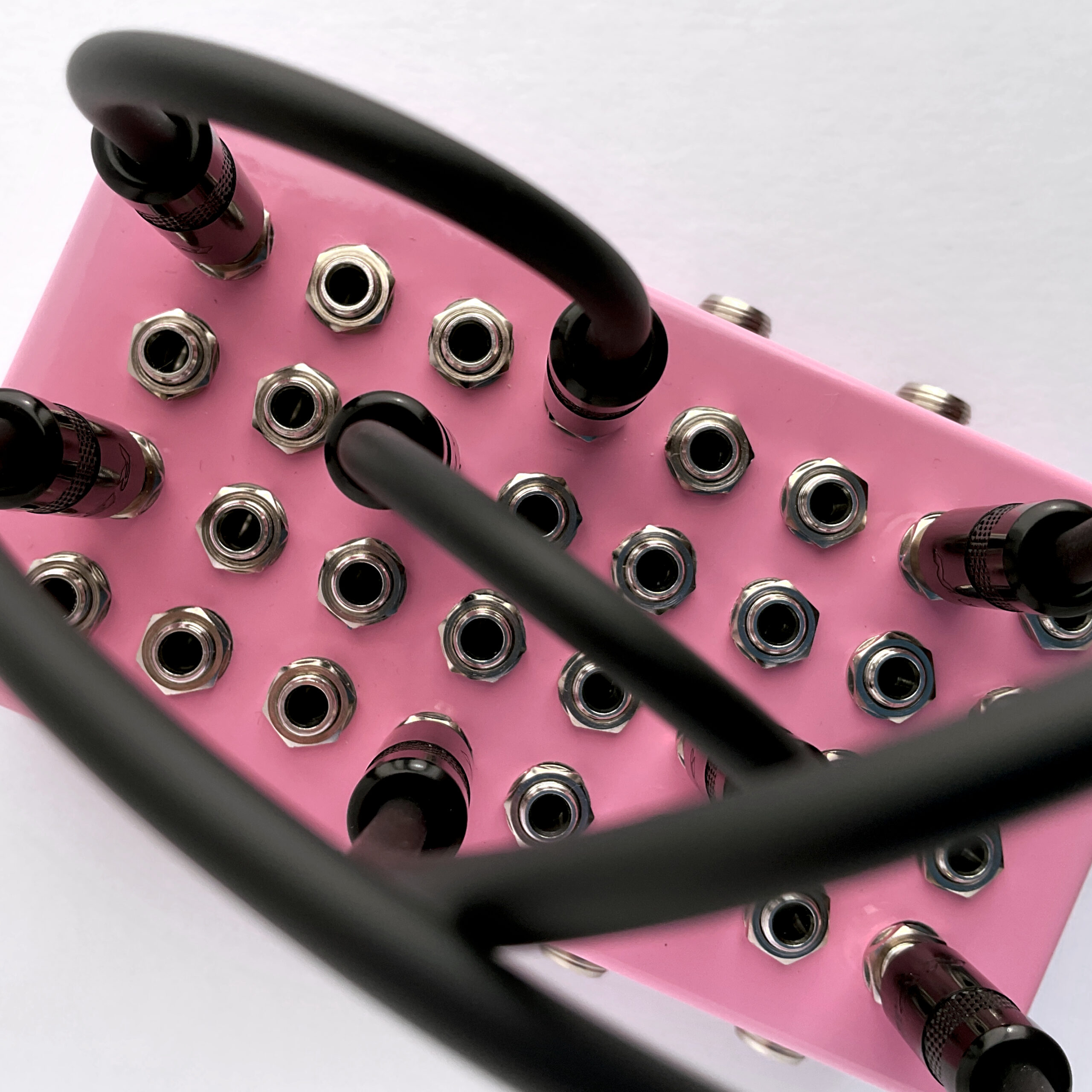
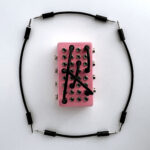
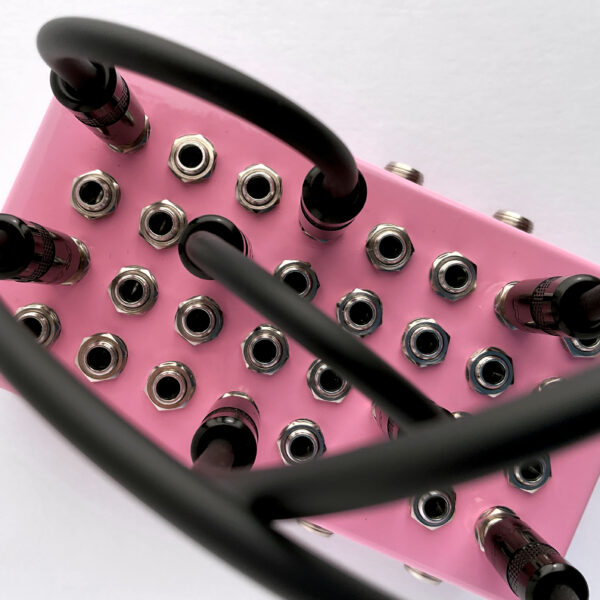
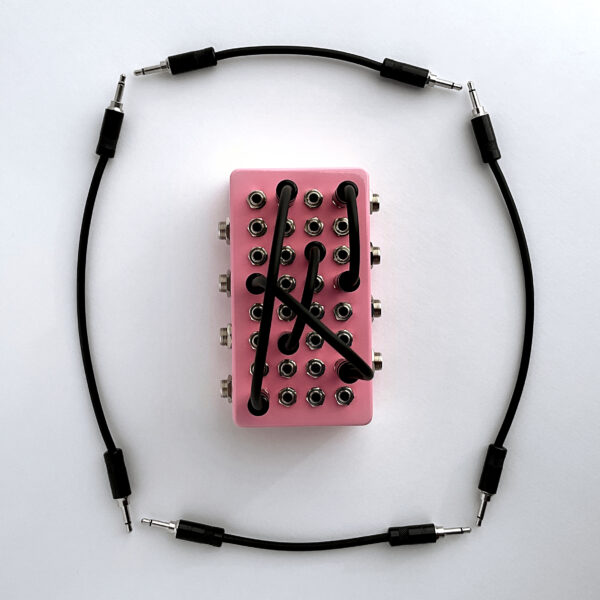
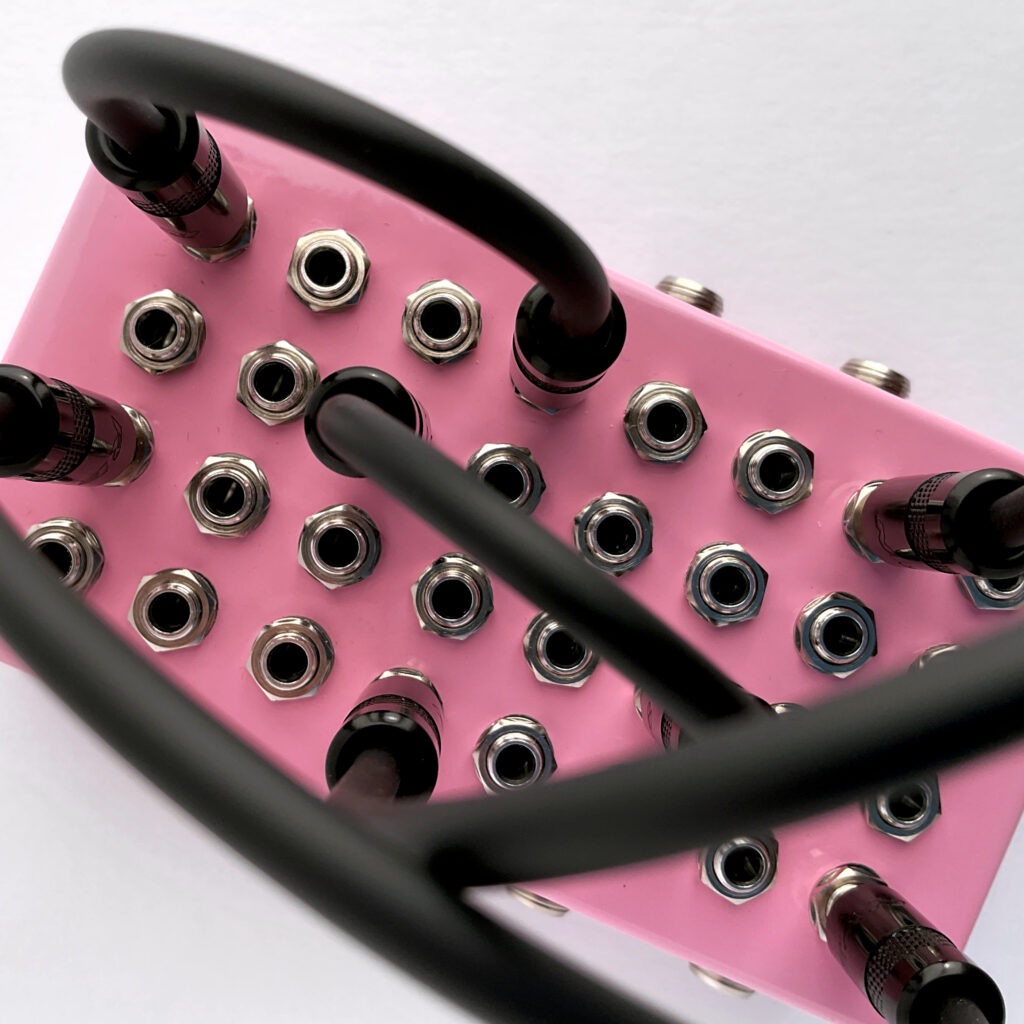
– Connect your instruments/synths to various pedals/mixers/recorders w/o having to rearrange your whole desk. Just use 3.5mm patch cables to make the connections and leave your main i/o cables plugged in.
– Split your audio to multiple outputs for parallel processing. Or combine signals by sending multiple sources to the same output.
– It can be a 3.5mm-1/4″ adapter for integrating your instruments/pedals with your modular rigs, tape machines, hydrophones, cat pianos, yak baks, circuit-bent NOS 1982 Cuisinarts, etc.
– And because it doesn’t require power, it’s infinitely portable.
excessively configurable signal-routing playground
Passive Analog Signal Mixing:
If you’re connecting 1 source to 1 output, it’ll behave exactly like you expect it to. It’s when you start splitting/combining that you CAN have interesting/unexpected results.
In many cases, splitting an unbuffered* signal divides its gain between splits (quieter), and combining signals will ‘add’ their gains together (louder).
But sometimes the results can be… different than the sum of its parts. We think of audio gear as having distinct ‘input’s and ‘output’s where the signal travels in one direction and the changes we make only affect the signal downstream.
But the reality is that electrical components are receiving information from both sides of the flow and, depending on many variables, can ALSO be affected by something happening downstream from them.
tip: ‘buffer’ before you split
A common example is ‘loading down’ the pickups on your guitar (i.e. ‘tone suck’). It’s when something downstream is trying to pull more current than the guitar can produce and can thin/dampen the sound. It can happen with certain pedals, and also when splitting the signal straight from your guitar into multiple outputs.
*One very useful tool (if you absolutely insist on ignoring common conventions with your gear and having fun and being iconic) is a ‘buffer’. A buffer senses the load on the output and compensates by automatically boosting the signal strength to unity gain.
Most modern pedals have buffers built into their circuits. But likely you have all kinds of different gear with different capacities and even well-designed gear has limits.
So it’s good to just keep this in mind while sending your electric jaw harp through your gameboy into your nagra reel-to-reel. Also standalone buffer/boost pedals can be bought pretty affordably (like maybe my next pedal release this winter) which can be used to ‘condition’ any signal. [Tip: put a drive/boost/tuner between your guitar and mulch box if you plan on sending it to multiple outputs]